

Articoli
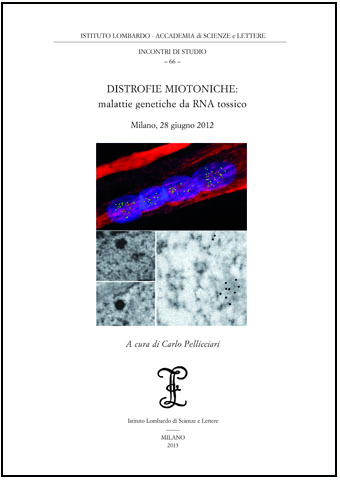
Distrofie miotoniche: malattie genetiche da RNA tossico
 https://doi.org/10.4081/incontri.2012.57
MYOTONIC DYSTROPHIES: GENETICALLY-BASED DISEASES DUE TO TOXIC RNA

Publisher's note
All claims expressed in this article are solely those of the authors and do not necessarily represent those of their affiliated organizations, or those of the publisher, the editors and the reviewers. Any product that may be evaluated in this article or claim that may be made by its manufacturer is not guaranteed or endorsed by the publisher.
All claims expressed in this article are solely those of the authors and do not necessarily represent those of their affiliated organizations, or those of the publisher, the editors and the reviewers. Any product that may be evaluated in this article or claim that may be made by its manufacturer is not guaranteed or endorsed by the publisher.
Ricevuto: 24 gennaio 2014
Pubblicato: 24 gennaio 2014
Pubblicato: 24 gennaio 2014
838
Visite
1462
Downloads
Downloads
La data di download non è ancora disponibile.
Come citare
MYOTONIC DYSTROPHIES: GENETICALLY-BASED DISEASES DUE TO TOXIC RNA. (2014). Istituto Lombardo - Accademia di Scienze e Lettere • Incontri di Studio, 5-8. https://doi.org/10.4081/incontri.2012.57